
“How-To”:Faux Wood and Ceramic Tile Floors

While there are many floor coverings you can buy to make the most out of decorating each room, there are several advantages to creating your own designs with a few inexpensive supplies.

  1. Doing it yourself is less expensive than purchasing specialty items.
  2. If you have any doors that open to the interior of the house, some purchased floor coverings can be so thick that you might have to cut off a portion of the bottom of the door(s) to allow for the increased height of the floor if it is covered with something thicker than the door(s) will allow.
  3. By doing it yourself you can customize or color the floor in each room to coordinate perfectly with the other decorative elements.

So in this segment I will show you how to create both a wood plank “look” and a ceramic tile “look” with simple acrylic paint, a kitchen sponge, a brown pencil, a touch up paint brush, and Mod Podge (or similar product). I am using the floor of a doll house that will be the ceramic tile kitchen floor on one side and the living room wood floor on the other side.

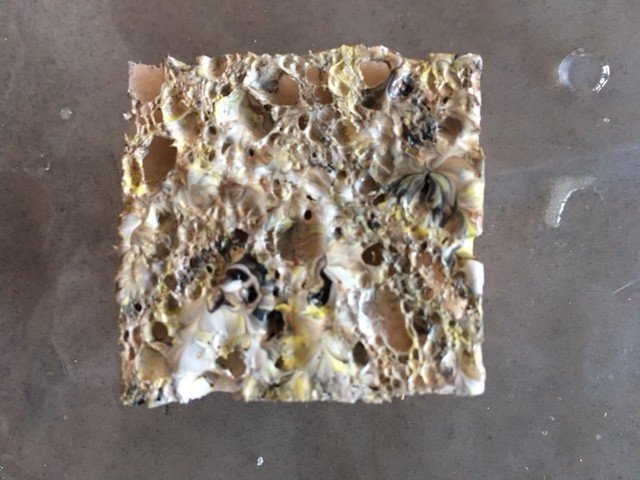
First, take a regular kitchen sponge and cut it into 3 pieces, making sure the corners are squared at 90 degree angles. (Note the texture of this sponge that is pictured. This texture makes great tiles.) I like to cut the main sponge into a 1 1/4″ square, then I cut a second piece that is 1/3 the size of the main sponge, and a third piece that is 1/2 the size of the second sponge. The 2 smaller ones will probably come in handy for edges and corners but you will mainly be working with the largest square piece of sponge. We will use these on the kitchen floor later so set them aside for now.
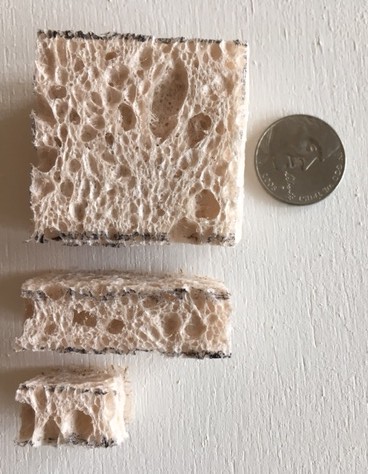
sponges for kitchen tile floor

Let’s start with the wood plank floor. Use blue painter’s tape to divide the entire floor piece into 2 sections…the kitchen (which we will do later) and the living room. There will be slots in the floor where the dividing wall between these 2 rooms will be placed as you assemble your doll house later. Place the edge of the tape on the kitchen floor side so that the edge runs vertically right down the middle of those slots (see picture below).
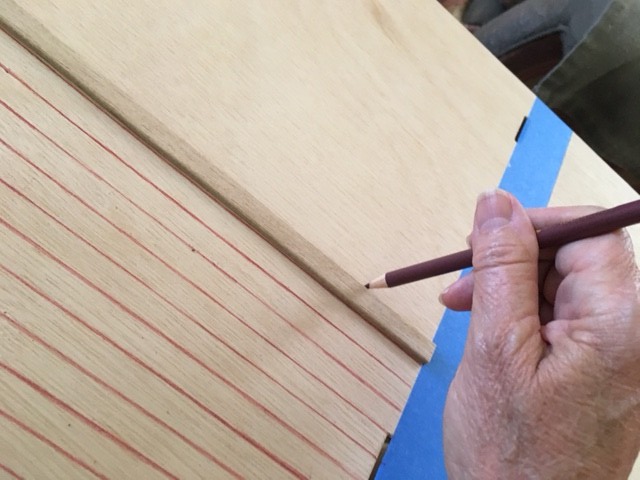
wood floor drawing plank lines

Using your brown pencil (which will need to be sharpened a few times during this process), and a long straight edge (like a trim piece or a yard stick) as a guide, draw straight lines evenly and horizontally (side to side) across the entire depth of the living room floor. You can decide how wide you want your planks to be depending on your taste.

Next, use the brown pencil to draw random vertical lines to denote the edges of the planks.

wood floor finished plank cross lines no stain

At this point, if you like the color of the wood then just apply 2 even coats of Mod Podge to finish it. However, if you want a darker floor, you can add a tablespoon of brown acrylic paint to approximately 3/4 cup of Mod Podge, mixing well. (I like a semi-gloss look but can only find Mod Podge in Matte or Gloss finishes so I simply mix equal parts of both finishes to create the semi-gloss look I prefer.) The Mod Podge will make the brown paint transparent and you can then paint the mixture evenly across the entire floor. The plank lines will show through the transparent mixture. If that is dark enough for your taste then apply a second, plain coat of Mod Podge (straight from the regular container…don’t use the mixture that includes the brown paint). If you want the floor to be darker however, then apply a second coat of the Mod Podge mixture that includes the brown paint.

There are many variations on this process…color, finish, plank size, etc. Try them all!

You are finished with your plank floor!

Wait for the plank floor finish to dry thoroughly before continuing.

Now that the plank floor is dry, remove the blue painter’s tape and apply a new piece of tape so that it protects the edge of the plank floor closest to the kitchen floor and exposes the total surface of the kitchen floor.

taping off unfinished kitchen floor next to finished wood floor

Paint the kitchen floor with 2 coats of acrylic or latex paint in a color that you want your grout lines to be. Let dry THOROUGHLY. I chose white. Reserve some of this paint to touch up the grout lines later.
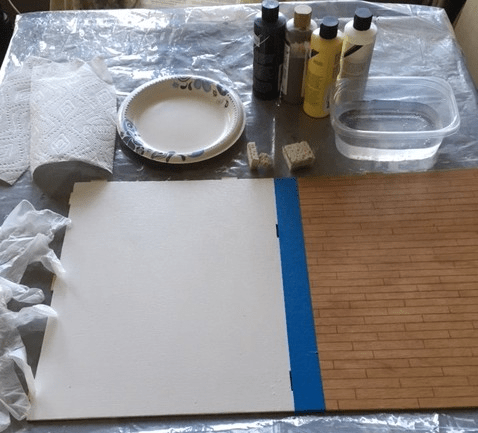
table set up for kitchen floor tiles.jpg 2

Note the supplies in this picture above that you now need to gather.

  1. your 3 sponges
  2. a container of water for keeping your sponge damp and for rinsing it when it gets overloaded with paint
  3. a paper plate to use as a paint palette
  4. latex gloves (unless you want to get a manicure when this is finished)
  5. paper towels (just in case you spill or drip the water)
  6. And finally…the acrylic paint. Any brand will do. You can buy these at an arts and crafts store. You definitely need the color white to use as a base for the additional colors and I find that my favorite additional colors for ceramic tiles include brown, black, yellow, and red. (For this demonstration we are not using red. If you DO want to use red, make sure you always add a bit of yellow paint or the red will turn out looking pink. The yellow will cancel that out.)

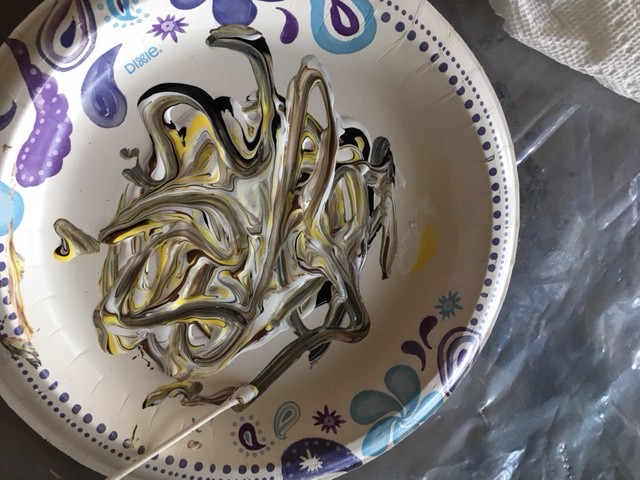
Now, on your paper plate squirt swirls of paint, starting with the white, like this:
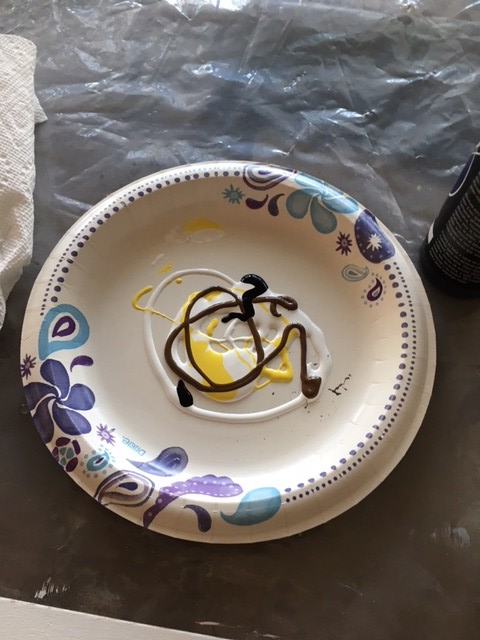
tile-paint on pallette


Note that there is more white than the other colors and go easy with the black…a little bit goes a long way. Now use a tool (I use a Q-Tip) to swirl the colors JUST A BIT, like this:
tiles-mixing paint on pallette

Now, using your dampened (and squeezed out) main square sponge, blot the sponge onto the paint in an up-and-down motion. It should look like this:
tiles-paint on sponge

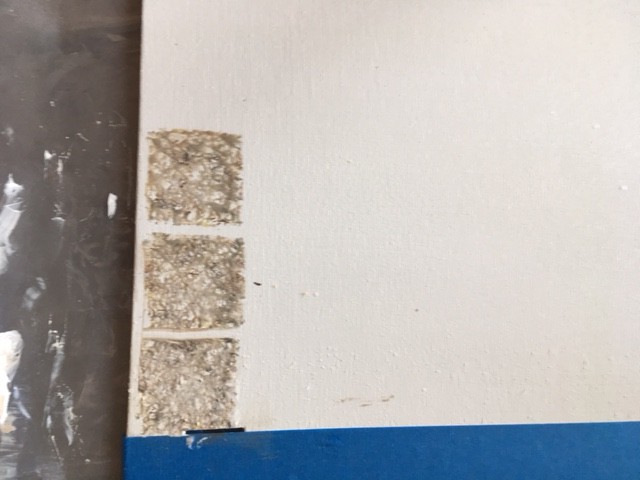
Use your finger to pat the paint straight down into the sponge. Each application of paint in this manner should be enough to produce at least 4-5 tiles on the kitchen floor. (At this point, you may want to do a test of this stamping process on a piece of plain paper just to see what you will be doing to the real floor.) Position the sponge on the floor on the first row and gently pat it down on all the corners. Then raise the sponge, turn it 1/4 turn and press it down on the same spot again for more natural coverage. Move it over, leaving space for the grout line, and repeat.
tiles-first 3 stamped tiles

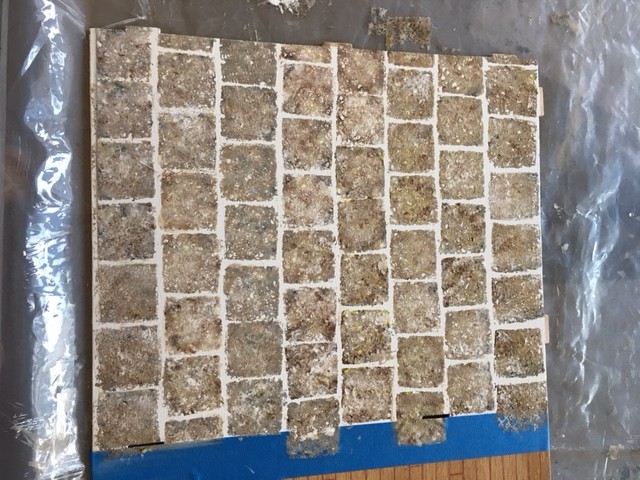
The edges won’t be perfect but remember that you saved some of the background color to touch up the grout lines when you are finished stamping tiles. Continue this process until the entire floor is covered. You will need to rinse your sponge 2-3 times during this process because it will get too overloaded with paint eventually and the tiles will begin to look “muddy”. Also, refresh the paint on your palette as needed.
stamped tile floor with all surfaces done-raw

Allow time for all of the paint to dry and then remove the painter’s tape. Using your small tipped paint brush and the background “grout” paint, touch up the grout lines so that they are fairly even and cover up all of the tile paint that accidentally “bled” over onto the grout lines.
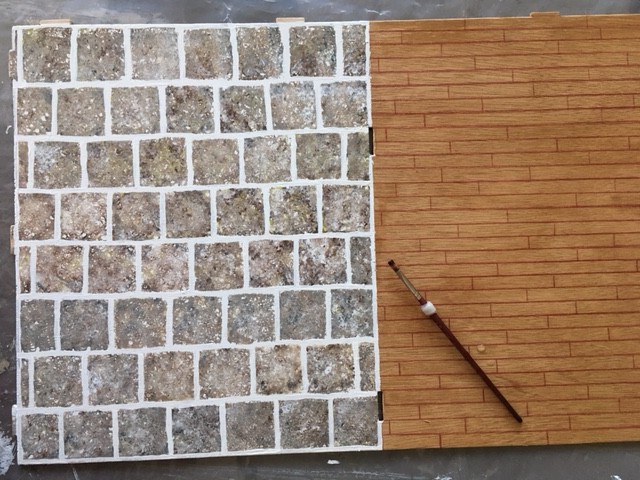
tile floor with corrected grout lines

When the grout lines are dry, apply a coat of Gloss Mod Podge evenly over the kitchen floor to protect the finish.

Congratulations! Your main floor is gorgeous! Send me your pictures when YOUR floors are finished!

Copyright 2020 All Rights Reserved


Need to add a room?

Earlier I mentioned that, here at Building Faith Play Therapy Toys, Inc., we often have to add an extra room (usually a bathroom) to kit doll houses because, for the purpose of play therapy for abused children, our doll houses must have a minimum of 5 rooms (including 2 bedrooms and a bathroom, plus a living room and kitchen). Yet many popular and affordable doll house kits have less than 5 rooms.

So we got creative and developed our own model for easily adding an extra bathroom (or any room). This process can be used just as simply if you want to add extra living space…even on both sides of the house.

For this demonstration, we will add a bathroom.

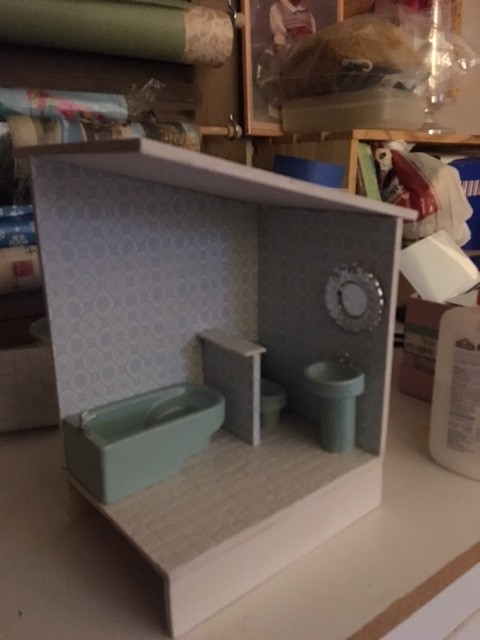
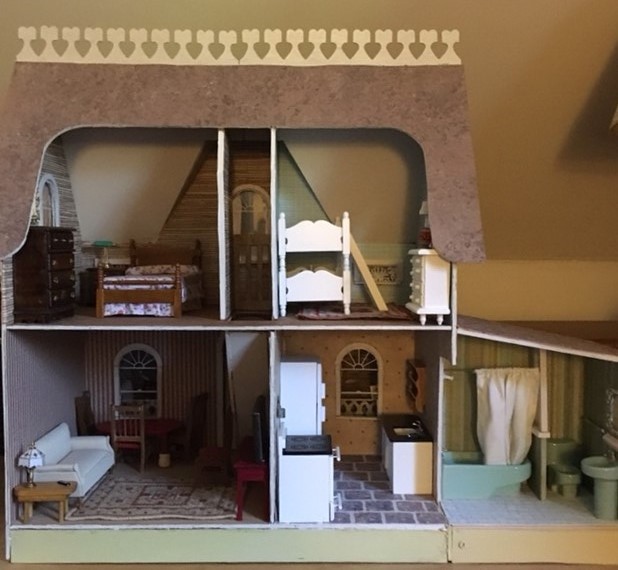
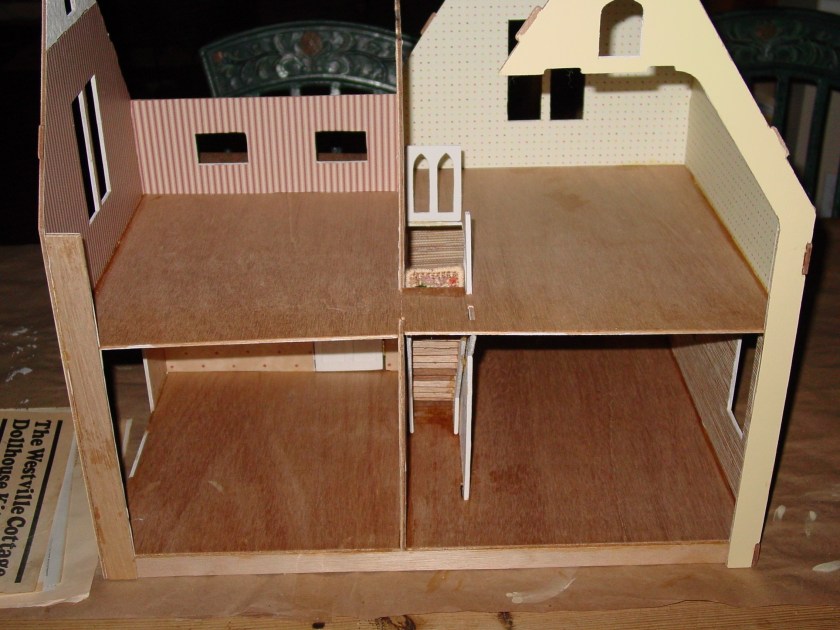
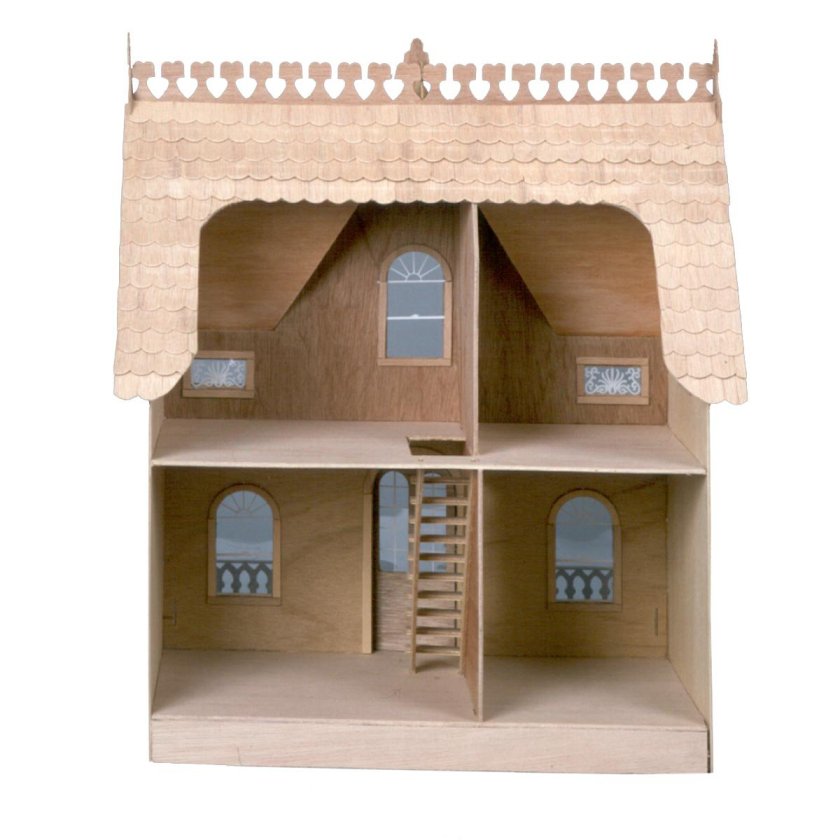
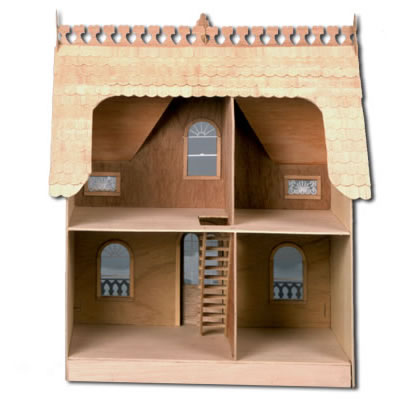
Here is a basic 4 room doll house:

8012-arthur-dollhouse-ub-400_fs

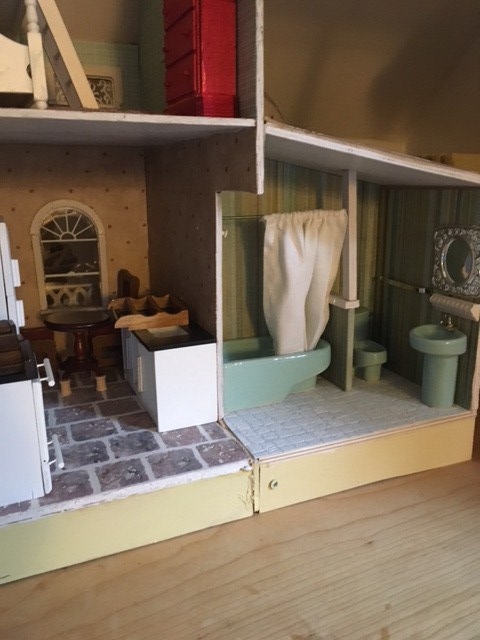
We built this bathroom to attach to the house on the right side (when facing the back of the house).

close-up-of-bathroom

Using a piece of craft wood which you can find in almost any large arts and crafts store, 12″ X 24″, and 1/4″ OR 3/8″ thick, we:

1.draw the shapes of the various pieces-roof, floor, back wall, side wall, and the front, back and side foundation walls,

bathroom-plans

2.cut them out with a jigsaw,

3.sand the edges,

4.decorate the walls with wallpaper or paint as previously discussed in an earlier blog about decorating the house before assembling it,

5. (remember to) paint the ceiling,

6.create a floor covering according to your taste, and

7.glue the pieces together with WOOD GLUE.

Allow to dry for at least 12 hours.

(When building a bathroom, it is important to create a floor plan/size that is large enough to accommodate your bathroom fixtures…tub, sink, toilet.)

While the glue is drying, you will need to cut a doorway in the exterior wall of the house to allow access from the main house to the newly added on room. This can be done with a jigsaw or keyhole saw.(Actually, it is easier to cut this opening while assembling the house kit but we rarely have that luxury so don’t worry if you have already assembled your house.) We use a jigsaw and cut an opening that is 2″ wide and about 6″ high (assuming your dollhouse is 1/12 scale) on the front edge of the exterior wall where you will be adding the new room. (See picture below. Notice the doorway opening that was cut in the exterior right wall of the main house to permit entry to the bathroom from the kitchen.)

doorway-that-must-be-cut-so-bathroom-can-be-attched-to-arthur


Once the glue has dried completely on the new room, use WOOD GLUE to attach it to the side of the house.

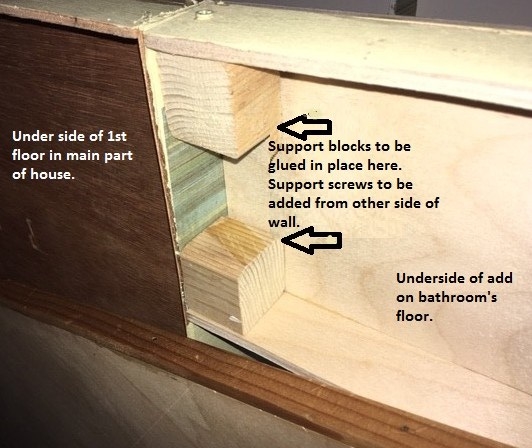
Also at this time, glue 2 support blocks underneath the bathroom floor, making sure the glue is applied to both the inside foundation walls of the bathroom AND the exterior foundation wall of the main house. (See picture below.)

under-bathroom-supports

Allow glue to dry for another 12 hours.

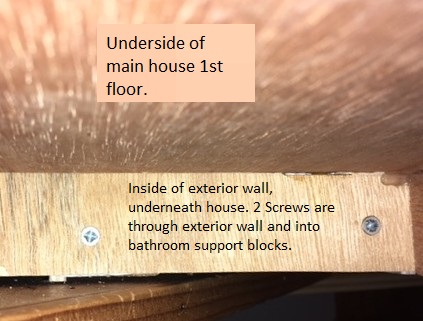
Finally, from inside the interior foundation wall underneath the main house, drive a screw through the foundation wall into the support blocks. This stabilizes the add-on room so it stays in place permanently. (See picture below.)

screw-in-supports

And there you go!

arthur

This same process can be used to add rooms of any size on either or both sides of your house so your doll family has plenty of living space! Maybe you want to add a play room, or a den…perhaps a library or music room. We’ve even added a ground floor master bedroom. Enjoy!

Copyright 2017

The Punch List-Step 6

Just as it is with a regular home under construction, once you have assembled your dollhouse, it is time for a “walk-through” to make your punch list of the little things that need attention to ensure a finished product you can be proud of.

First, pick up your dollhouse by the sides and shake it a bit to see if anything rattles or sounds loose. You may need to re-glue some pieces.

As I said in an earlier blog, this is the time to do paint touch-ups with the paint you saved when you originally painted all of the surfaces prior to assembly.
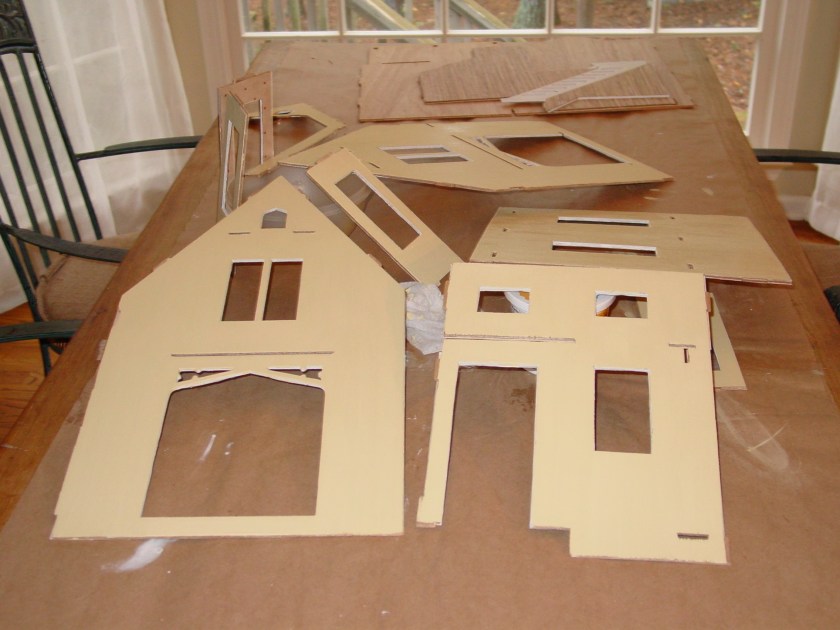
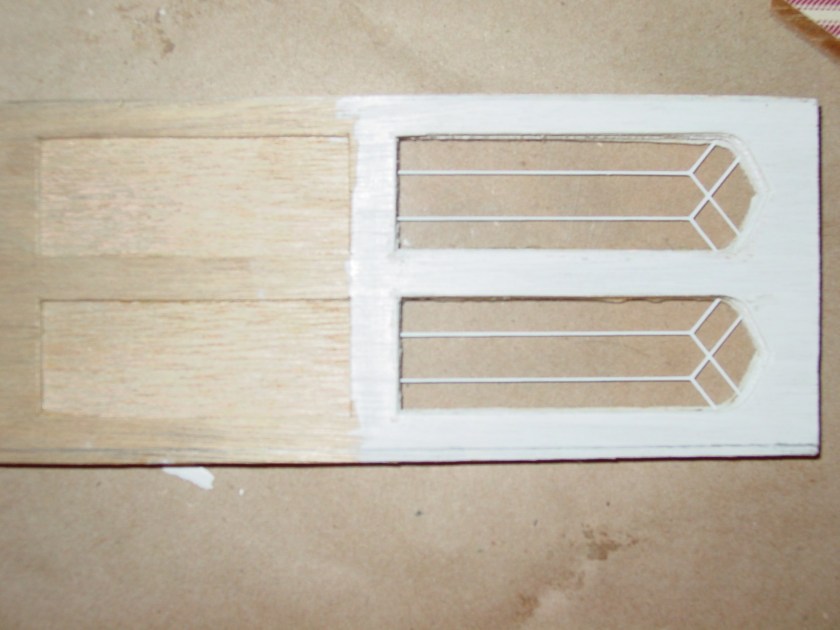
Here are a few things to look for.

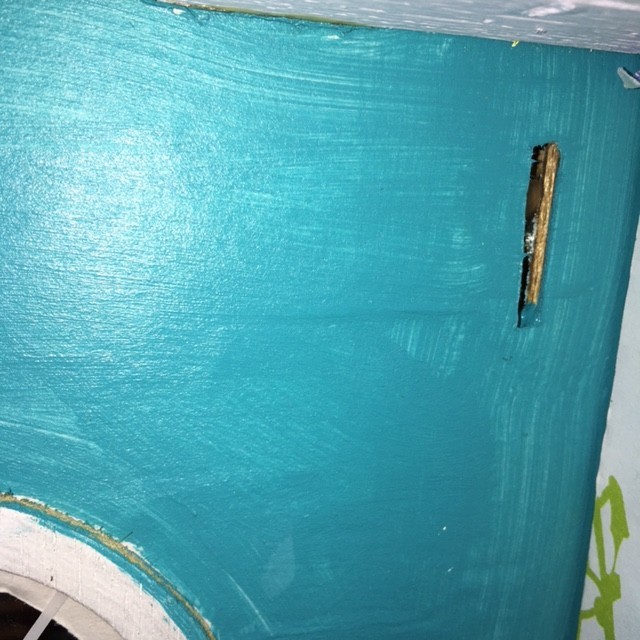
  1. Look for all of the holes where notches were inserted into tabs during assembly. Fill the holes with wood putty and allow to dry. Then sand the putty until it is smoothly flush with the wall around it and use your leftover paint to paint over the dry wood putty and any glue that may be left behind from the assembly process.
 

2. Check the interior walls and ceilings to see where paint touch-ups may be needed. Here is an example where the edges of the gabled roof pieces need some touch-up paint. Look over the entire dollhouse carefully. It is very easy to miss something.

1-missed-touch-up-paint


3. Check your painted areas one more time to see if the color looks smooth and even. If you used a darker color, and didn’t apply 2 coats of paint, this is what you will see. Take note of the unevenness of the color plus the touch-ups needed around the window trim. (This type of mistake is a clear indication that this room was painted AFTER assembly and illustrates why I strongly recommend decorating your walls BEFORE assembly.) Also note the tab/notch area that needs to be puttied, sanded and painted.

2-bad-paint-job-and-notches-not-plugged

How many items can you add to your punch list in this one picture alone? Do you see the importance of painting the EDGES of ALL trim pieces BEFORE attaching them? I see at least 8 missed edges and areas. Trust me when I say, it is SO much easier to paint these edges BEFORE assembly rather than to try to do it now. (How steady is your hand and how tiny is your paint brush? Painting edges after assembly is very tedious.)

5-myriad-of-exterior-mistakes


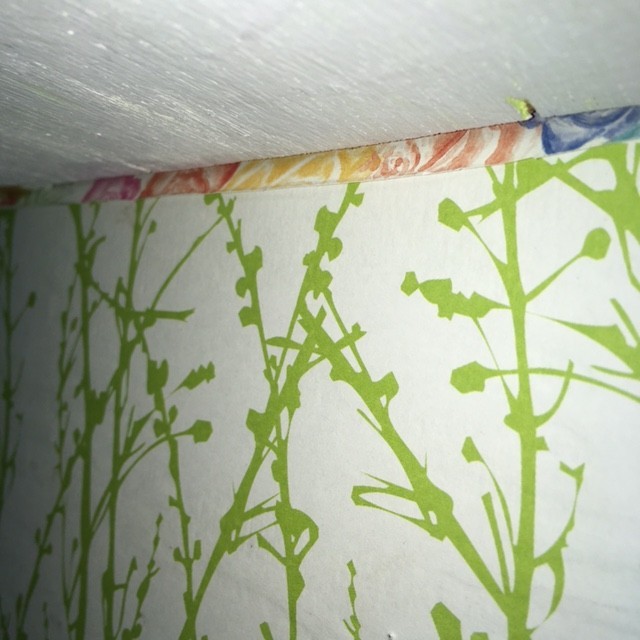
4. As you were decorating the house walls PRIOR to assembly, did you stop your wall upstairs wallpaper edge at the top edge of the notches (that anchor the piece that is both the ceiling for downstairs rooms and the floor for the upstairs rooms) OR at the bottom edge of that same notches for downstairs rooms? If not, this is what you will be dealing with now. (See below.) The wallpaper from the upstairs bedroom wasn’t stopped at the top edge of the notch for the upstairs floor. Hence, a half-inch of the bedroom wallpaper from upstairs now emerges at the top of the living room wall. It isn’t fun trying to remove that little strip of wallpaper without damaging the wallpaper underneath it because the glue will cause the intended wallpaper underneath to tear. If you have done this, my suggestion is to add crown molding to cover your mistake.

3-wallpaper-not-trimmed-properly

Finally, make sure that the wall and floor EDGES that face you as you look at the dollhouse interior rooms are all painted. I can’t count the number of dollhouses I’ve seen in my life that had some painted edges and some that were not painted. It makes for a very unpolished finished look.


Copyright 2017


The Roof-Step 5

Depending on the style of your dollhouse, you have to decide what type of roof material would enhance the finished look.

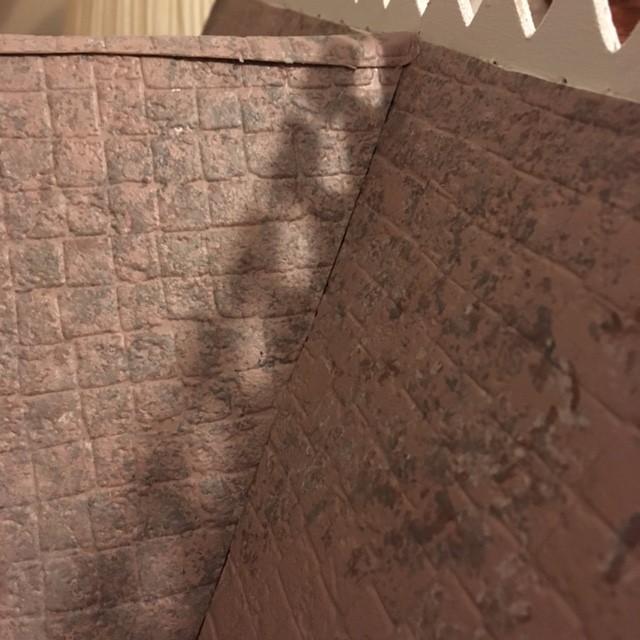
For beginners, if you search online for “embossed wallpaper”, you can find rolls that have small, raised squares that resemble asphalt shingles common on modern houses these days. This is an easy way to achieve a natural look.

  1. I “custom-color” them by sponge-painting the wallpaper with a slightly damp sea wool sponge dipped in the colors I choose to blend with the house. The sea wool sponge texture creates the speckled look of asphalt shingles very easily. (Ex. Below- black, brown, gray, and a little bit of white all applied to the sponge at the same time.)
  2. Sponge paint enough of the wallpaper so that you have enough to cover all exterior roof pieces.
  3. Allow to dry.
  4. Then use the roof pieces as templates, using a pencil to draw around each piece on the BACK SIDE of the wallpaper (after the paint has dried)…making sure that you place the EXTERIOR side of the roof piece DOWN on the BACKSIDE (the side you DIDN’T sponge-paint) of he wallpaper. Be sure you place the roof pieces on the wallpaper in a level (90 degree) fashion so that the “shingles” will all run at a level horizontal way once applied to the roof piece.
  5. Cut out all of the pieces of wallpaper. Do NOT apply to roof sections yet.
  6. Assemble the roof according to the kit directions. Use WOOD GLUE. Allow to dry.
  7. Apply each piece of sponge-painted wallpaper to its corresponding roof section with regular white school glue. Some trimming may be necessary. I use a 1 inch wide strip of leftover painted wallpaper to cover the roof peak, where needed. (See picture below.)

8-shingle-sheet-roof

If you don’t feel you are ready to attempt sponge painting your roofing wallpaper, many arts and crafts stores carry specialty papers that are printed in patterns that can mimic roofing materials. Here are a few examples:

These decorative specialty papers would be applied to the roof pieces in the same manner as described above for the used of sponge-painted wallpaper. Just follow steps 4-7!

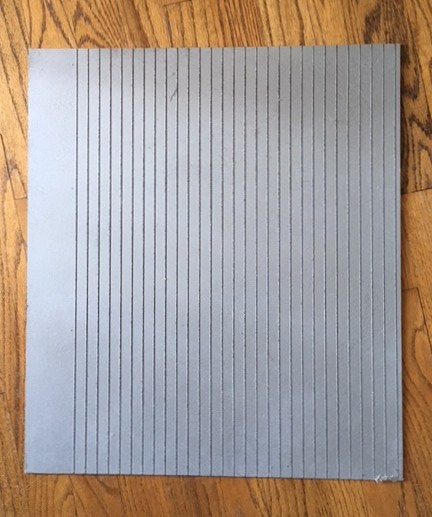
You can also buy craft wood sheets at arts and crafts stores and create your own roofing material, using the roof pieces included in the kit as templates to cut the proper shapes of any roofing material you choose. Here is craft wood with grooves painted silver to mimic a tin roof. Use craft wood that is 1/4″ or 3/8″ thick for best results.

tin-roof


Now, if you are more experienced with dollhouse construction, cottages, Victorians, and several other styles lend themselves to individual shingles…the type that are glued on one-by-one…by hand. If this is your first dollhouse, you may want to limit your choices to simpler methods and work up to shingles. But if you are willing to try this, here are a few tips.

  1. If you haven’t already done so, go ahead and attach the roof sections to the house according to the directions that came in your kit with wood glue and let dry.
  2. Make sure you have enough shingles. They usually come included in the kit but, if you are buying them separately, make sure you can obtain more of them if you underestimate how many you will need to finish and run out before finishing.
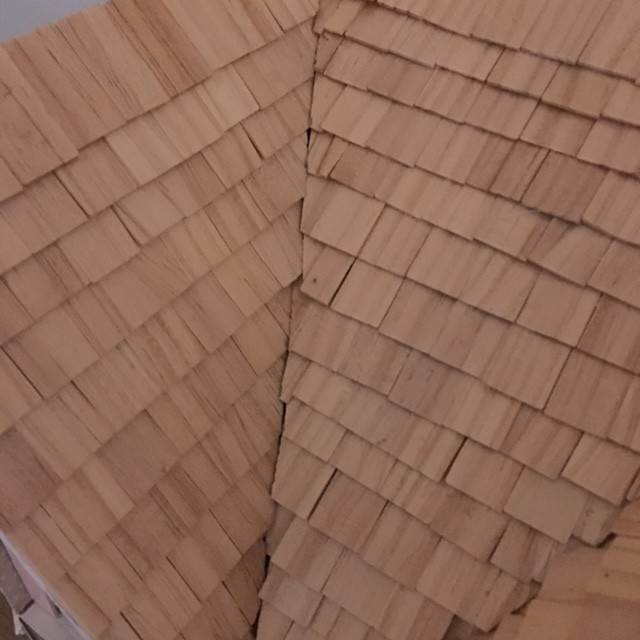
  3. Have a pair of sharp scissors available to cut the shingles at angles when you get to the gable edges. (See picture below.)

7-shingle-roof

4. This is the ONE AND ONLY TIME I am going to recommend the use of hot glue…ONLY to attach shingles. Otherwise, you will be working on this part of the project for weeks..

5. Use a pencil and straightedge to draw LEVEL horizontal lines, about 1 inch apart, across roof sections so that they are aligned/straight across the entire roof, even as the roof sections change (for instance, at gables). These lines will make it easier to keep your shingles level as you work.

6. Start gluing on your first row of shingles at the BOTTOM edge of the roof so the each successive, higher row can OVERLAP the row below it slightly. Take your time. This takes skill. For a more natural look, make sure to stagger your shingles so that the spaces between shingles don’t all line up in perfectly straight vertical lines.

Now your house has a roof!! Stay tuned. We will begin to delve more deeply into decorating and furnishing the house using ideas you may not have thought of before. Your kitchen junk drawer is about to become a treasure trove.

Copyright 2017


Time To Assemble the House-Step 4

Since different manufacturers of doll house kits create different floor plans, you will now need to follow their directions for attaching the walls, floors, and roof parts together. (DO NOT attach roof parts to the house until reading Step 5, the post immediately following this one, as it will describe roof decoration and assembly issues.)

Here are quite a few tips for this part of the process.

First and foremost, while directions can vary and some will tell you to use hot glue for assembly while others will recommend wood glue…

DO NOT USE HOT GLUE TO ASSEMBLE YOUR DOLL HOUSE!!!!!!!!!!!!!

Do Not, Do Not, Do Not use HOT GLUE!

Whew…I hope I just made my point.

While I understand the convenience of using hot glue (it dries quickly so you can assemble the house quickly) IT WILL NOT HOLD UP OVER TIME AND YOUR HOUSE WILL FALL APART.

At Building Faith Play Therapy Toys, my nonprofit that provides doll houses to abused children in recovery to be used for therapy, we partner with many community groups that volunteer their time to construct dollhouses, which we then decorate for the individual child’s needs. I always visit with these groups and give them the Dos and Don’ts of construction and I always say, “Use wood glue only.” In spite of that, we do get houses returned to us that were put together with hot glue. They are already falling apart when we get them. (I had one literally fall apart in my car on the way back to the office from picking it up.)  Then we spend about 3 weeks disassembling the house, scraping off the remnants of hot glue, and using wood glue to reassemble the house.

Trust me. It isn’t fun and I don’t recommend it to you either.

Sooooo, the assembly of a doll house must be done with wood glue if you want it to be stable enough to touch when you finish it.

This means you are in for slow progress as you will find that you can only glue two or three pieces together at a time and then you must wait for the glue to dry…sometimes for 5-6 hours. You also may need to clamp some sections during the glue drying process.

dsc05340

Ho-hum. But whatever will you do in the meantime?

Well, you have at least these two things you could be doing during the process of gluing major house sections together and waiting for glue to dry that will prepare you to jump right in with the next steps once your major house sections are totally glued together.

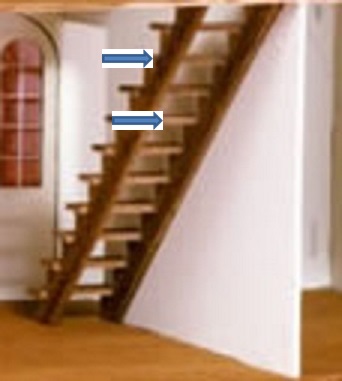
First of all, I like to assemble the staircase while glue is drying on major wall sections, assuming there is a staircase. Most directions call for you to glue each individual tread to one stringer, wait for the glue to dry, and then glue the other stringer to the opposite side. (This is when it REALLY gets tempting to use hot glue. DON’T. I put a staircase together with hot glue once…it fell apart in my hands as soon as I picked it up.)

8012-arthur-dollhouse-pb-400_fs

FYI: The TOP blue arrow identifies one of the 2 side stringers. The LOWER blue arrow identifies a tread (or stair step).

(NOTE:When gluing the treads to the first stringer, the treads have a tendency to topple or lean over…until the glue starts to set up. I have solved this problem by placing a piece of brown craft paper on a flat surface and running several strips of double-sided sticky Scotch Tape side-by-side on the craft paper. Place the first stringer on the tape. The tape holds the stringer steadily in place as well as the treads, on their end sides, while the glue dries. Then you can gently peel the entire assembly off of the tape once the glue has dried completely. Just make sure that your treads are evenly spaced at 90 degree angles so they will fit against the second stringer when you are ready to attach it later. I hold my second stringer up to the treads that have been glued to the first stringer BEFORE the glue dries completely in case I need to readjust the position of any of the treads to fit the second stringer before the glue is permanently dry on the first stringer.)

Once all of the glue is dry, the stairs can be painted or stained according to your decorating scheme. (At my nonprofit, we customize all of our staircases with handmade needlepoint stair runners that match the decor of the house. Our patterns are all our own original designs. Some are for sale on eBay if you want to try to make you own and wish to see some of our patterns. Use search terms “dollhouse stair runner” under seller name “malyopal” to find them.)

Now your staircase is built and ready to install when you reach that point in your particular kit’s instructions!

The second thing I like to do to keep myself busy while waiting for wood glue to dry on each new section that is being added to your house is sand and paint all of the window trim, door trim, decorative wood trim, and exterior trim pieces that, heretofore, are still attached to the wood sheets that they were packaged in. Up to now, we have left them alone so as to avoid getting these pieces mixed up.

I like to find a quiet work space where they will not be disturbed. I tape a piece of brown craft paper to the surface. I then punch out each of the trim pieces, one at a time, and carefully sand the edges to remove splinters. Once each piece has been sanded I carefully lay it on the craft paper and LABEL IT by writing on the craft paper so that I don’t forget what each piece is. I then overlay the craft paper with wax paper so that, as I paint each piece and put it back down in its place to dry, it will be on top of the wax paper next to its labeling so I still know what it is and it won’t stick to the craft paper.  (And I can see my labeling of each piece through the wax paper.)  This may seem like a lot of effort but some kits contain a LOT of trim pieces and you don’t want to get confused about which piece goes where later.

So there you have it! Two projects that can keep you busy while you wait for wood glue to dry as you attach walls to floors, one-by-one…using WOOD GLUE for a permanent hold.

(Have I said WOOD GLUE enough now?)

And the best part is, when your assembly is complete, your previous work of wallpapering and painting the interior and exterior BEFORE assembly now pays off because your house is ALREADY DECORATED! Aren’t you glad?


Copyright 2017

Hinging/Attaching the Front Door-Step 3

If you are assembling a dollhouse kit, you may find that this step is listed much further along in the instructions.

Take it from me…trying to attach a door to the door frame with screws that are so tiny they are almost impossible to see, isn’t fun when the entire house is already built.

(Many kits tell you to simply glue the door back into position after painting it but I haven’t met anyone yet who didn’t want to be able to open and close the door.)

It is MUCH easier to attach the door while the wall that contains the door frame is not attached to anything. (NOTE: You are going to need a tiny Phillips Head screw driver for this step.)

STEP-BY-STEP directions are below, but let’s cover a few important things to know before you begin.

First of all, your door is most likely the type that is going to be “punched out” from the exact space or hole that will become the door opening, itself. It came that way in the package. Which means it is the exact size of the door opening. Which, in turn, means that it is going to have to be sanded REALLY well on ALL sides in order for it to swing freely into and out of that tight door opening once installed without scraping on the floor or getting stuck within the sides of the door opening.

And the addition of the hinges means you need even more of the side edges sanded off to make room for the operation of the hinges.

If this sounds confusing, then just take my experience into account. I usually take a pencil and straight-edge ruler and draw a straight line, on all four sides of the door, about 1/8″ or a bit more, from each door edge. Remember, not only do you need to leave room for door operation, but you are also going to paint the edges of the door later and that little bit of paint does add width and length to the door, itself.

Now, if your kit didn’t include hinges and door knobs (and most kits don’t include this hardware), you will find that specialty suppliers for dollhouses will sell you a complete set for a door for about $7-$10. Since I run a nonprofit that provides dollhouses to abused children, I am always looking for ways to save money so we can serve more children.

So I found that the hardware used on these small wooden boxes (many styles can easily be found at large arts and crafts stores for $1.99) works perfectly and saves money at the same time. The boxes are usually about 2 1/2″ X 4″ or roughly that size…small enough to fit in you open hand. (See pictures below.)

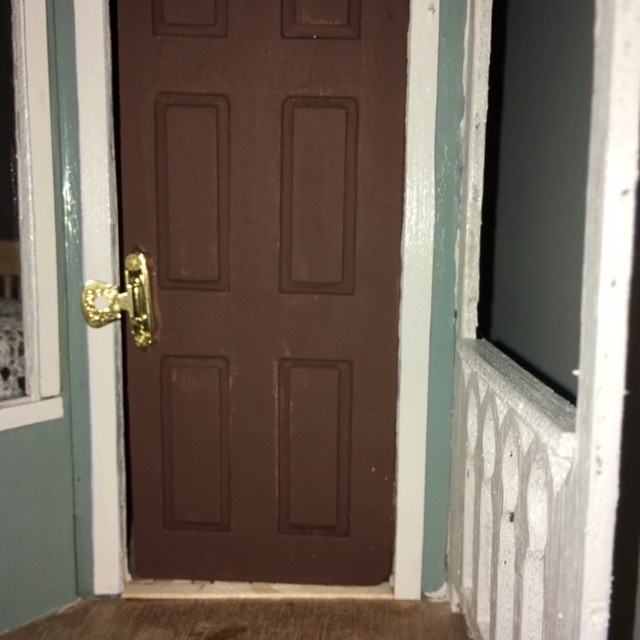
The 2 hinges visible in the middle of the second picture will do nicely when hinging the door to the wall next to the door opening. The tiny clasp that “locks” the box closed has 2 pieces. I like to use the piece at the bottom of the second picture as the interior door knob, while using the other part of the clasp on the exterior of the door to keep the door securely closed. The part of the clasp that is hinged can be placed and attached in such a way that it can be flipped over to cover the door frame, keeping the door closed. (See pictures below.)

So, in this order, I:

  1. Sand down the edges of the door and paint the exterior side, the interior side, and the edges with the colors I have selected. Allow the paint to dry. Hold the door inside the door opening and check to be sure you have at least 1/8″ clearance on all four sides.
  2. While holding the door in place in the opening of the wall (high enough off the floor so that the door won’t scrape the floor when being opened and closed), decide where you want to place your hinges on the interior of the door in the house, taking note that the holes for the screws in the hinges must reach onto solid wood- both on the door and on the wall once the hinges are screwed in place. (The door needs to be close enough to the “receiving wall” so that the hinge holes’ placement will allow the hinges to be attached to both the door and the “receiving wall”.)
  3. Position the first hinge in the correct place on the DOOR with your finger and, while holding the hinge in place securely, place both the door and the hinge gently onto a flat surface and mark, with a pencil, the exact place for the hinge screws by putting the point of the pencil down through the screw holes. I like to make tiny pilot holes for the screws with a thumb tack where the pencil marks are at this point.
  4. Screw the hinge onto the door. (NOTE: Since doors tend to get a lot of use, I like to dip the pointed tip of the tiny screw into a dab of wood glue before screwing into place for added strength later.) Repeat this process for the second hinge as you attach it to the DOOR.
  5. Now hold the door in place in the door opening of the wall, placing the unattached sides of the hinges on the “receiving wall” in a position that will allow the door to swing freely open and closed. (Remember to allow clearance at the floor level so the bottom of the door doesn’t scrape the floor when it moves open and closed.) With your pencil, mark through the screw holes on the 2 hinges so that you have marked their correct positions on the “receiving wall”. Use a thumb tack to make pilot holes for the screws.
  6. Screw the hinges onto the WALL. (NOTE: Since doors tend to get a lot of use, I like to dip the pointed tip of the tiny screw into a dab of wood glue before screwing into place for added strength later.) Repeat this process for the second hinge as you attach it to the WALL.
  7. Screw the “door knob” portion of the box clasp to the interior side of the door, at your selected “door knob height”, using the same attachment methods you have been using for the hinges.
  8. Attach the other portion of the box clasp to the exterior door, making sure that the section the is hinged will lay flush across the door frame (once installed.) Refer back to picture above if needed.
  9. Finally, the door frame trim pieces can be located in the kit, punched out, sanded and painted. When the paint is dry, use wood glue to attach the trim pieces, both interior and exterior, to the frame of the door. The interior frame piece on the side of the door with the hinges will cover the hinges on the wall nicely.

Congratulations! You have a functioning door! (Note: Save the leftover wooden box pieces from which we took the hardware. Later in this series, I will show you how you can use them to make a nice furniture piece.)

exterior-door-knob-2

Copyright 2017

Stay Tuned…

Sometimes you have to get creative to resolve issues when customizing a dollhouse. That is part of what my blog is all about.

At my nonprofit, Building Faith Play Therapy Toys, Inc. (www.bfptt.org), we have found several Greenleaf dollhouse kits that work well for our purposes. However, one of them has no space for a bathroom…and we all know a home needs a bathroom. This solution works well for many other dollhouse styles as well.

minmax

As I go through the step-by step processes involved in building a dollhouse from a kit, I will provide you (soon) with a clever way to resolve this problem.

Stay tuned!

Copyright 2017

Decorate Before Assembly-Step 2

I know it sounds counterintuitive to decorate the interior (and some of the exterior) of the dollhouse while it is still in pieces but, trust me, you will understand in a minute. Many kits contain instructions that tell you to assemble the house first and then tell you at the very end to “decorate any way you want to.” TRUST ME…decorating to the degree I’m about to discuss will make this project SO much easier.

(Check one more time now to be sure all edges have been sanded to avoid splinters. Also, if you plan to wire your house for electric lighting, the electrical tape that carries the wire from the future location of the ceiling light or lamp must be installed according to the manufacturer’s directions prior to installing wallpaper. Common places for light fixtures are on the ceiling of a room or anywhere you plan to place a lamp, such as next to a bed or on a table next to a sofa or chair.)

Let’s talk about the interior surfaces first. Remember that we are only working with the major pieces of the house now…all small trim pieces should still be attached to the board sections, not punched out, and set aside for now.

Whether you plan to wallpaper, paint, or stain interior walls, ceilings, and floors, the job is more easily accomplished while the house is still unassembled because you will be working with pieces that can be laid flat on a work surface, and have no connecting, adjacent surfaces that have to be taped off and avoided.

For instance, painting walls after assembly means taping off the floor AND ceiling to avoid getting wall paint on those surfaces (particularly if you plan to stain the floors…just try getting all of an accidental paint spill off of unfinished wood!) But if you paint the walls prior to assembly, no taping off of surrounding surfaces is necessary. This saves SO much time later! ONE MORE IMPORTANT THING…save your leftover paint when you are finished. You will need it for touch-ups after assembling the dollhouse.

If wallpapering, this step is even more important. When trying to wallpaper an assembled dollhouse, attempting to cut a piece of wallpaper to exactly fit some of the many angles that can occur in an assembled dollhouse (particularly when working around the ceilings of the top floor) is enough to make anyone give up. But working with a single, flat piece means you can lay the wall section directly on the wallpaper on a work surface and use it as a template, tracing around the wall section and inside of any windows onto the wallpaper.

(I like to shop at wallpaper stores in the bin where they sell spare, single rolls that have small prints for about $1.00. This wallpaper is sturdy and easier to work with, without tearing it. I once found a large roll of wallpaper with a tiny raised, embossed tile-look that I have used for literally years for bathroom and kitchen floors. It is sturdy enough to be painted any color I choose. But I also shop for decorative papers, sold by the sheet, at arts and crafts stores if I need something very special.)

HERE WE GO!

You may need a partner to help you with this part. Find all floor, wall, roof, and ceiling pieces and place them on your work surface. Study the directions to determine which pieces will actually fit together and where they will connect. Hold together as many pieces as possible in order to determine which parts of each piece will “belong” to the same room once the house is assembled…and lightly mark each side and section (upstairs and downstairs) of each piece with a pencil so you can identify which room they belong to, and if it is an INTERIOR or EXTERIOR side as you paint and wallpaper the sections. (Ex: “Interior Living Room Wall” or “Interior Child’s Bedroom Wall” or “Upstairs Interior Hall Wall”)

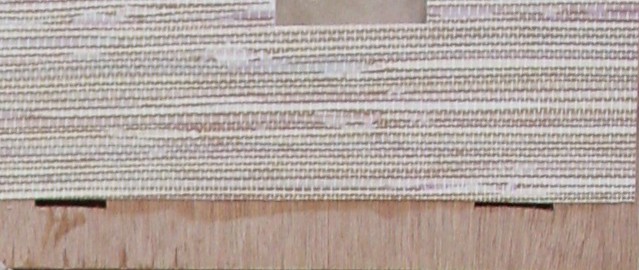
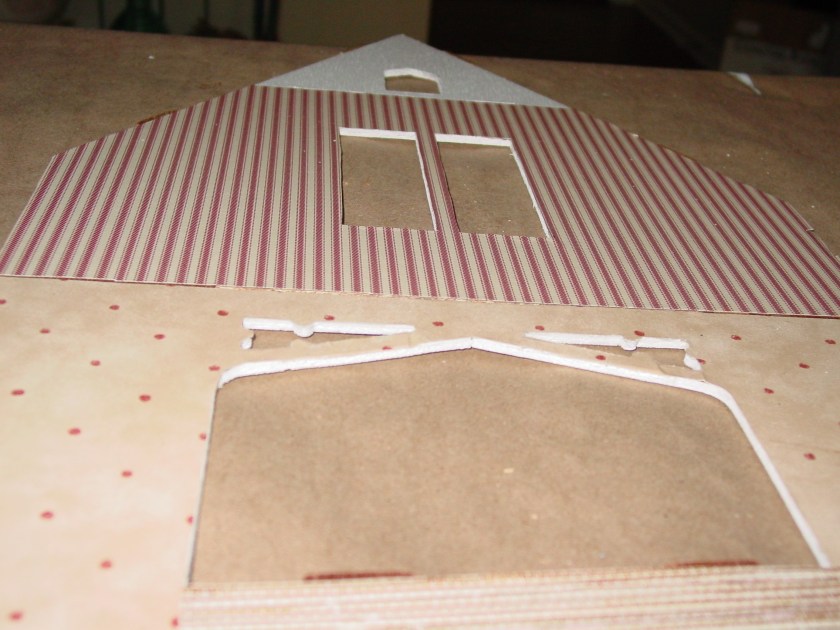
In most cases, the tall walls comprise both a first and second story wall (and sometimes the attic, too), meaning they include a downstairs room, an upstairs room, and an attic. Most kits will have notches in those walls where the upstairs and downstairs floor tabs will be inserted during assembly. The TOP edge of that notch is the exact line where the upstairs and downstairs floors will connect to that room. This is important to note because, when pre-painting or wallpapering the walls, you will need to know where to stop painting or wallpapering at the bottom of the wall for a particular room. (See, in the picture below, that the wallpaper for an upstairs bedroom STOPS AT THE TOP OF THE NOTCH THAT WILL HOLD THE TAB of the piece that comprises both the FLOOR of the 2nd story and the CEILING of the 1st story.)

where-to-stop-the-wallpaper-at-notch

Likewise, the BOTTOM edge of the notches that will hold the upstairs floor/downstairs ceiling is the line that indicates where the paint or wallpaper for downstairs rooms should stop at the ceiling.

DO NOT PAINT INSIDE THE NOTCHES THAT WILL HAVE FLOOR OR WALL TABS INSERTED INTO THEM DURING ASSEMBLY! AND DO NOT PAINT THE TABS EITHER! Most kits are designed for those tabs to fit tightly and a coat of paint can prevent the tabs from fitting inside the notches. A bit of paint touch up may be required later around the notches but, again, DO NOT PAINT INSIDE THE NOTCHES OR ON THE TABS.

do-not-paint-tabs


Here is an example of an interior wall that has had wallpaper attached for the downstairs and upstairs rooms, while the attic wall has been painted white. This is all one piece of wall section. The notches for the floors, which are visible in this picture to the far left and right, allowed me to determine where to stop or start wallpaper and paint.

wallpaper-all-walls-before-assembling-3

(I like to place my wallpaper decorative side down on my clean work surface and trace on the back side to avoid pencil marks on the decorative side that may show once the house is assembled. This means determining which side of the wall piece will be on the INTERIOR of the house once assembled and placing the INTERIOR side FACE DOWN on the backside of the wallpaper.)

Once I trace the template, I allow for the fact that my pencil marks are ever so slightly outside the actual size of the wall so I cut out the wallpaper piece just barely inside the pencil lines to achieve a perfect fit. When gluing the wallpaper to the dollhouse wall, I like to use a slightly watered-down white glue. It spreads nicely (I like to use my fingertips), doesn’t stain, and with the small amount of added water you get a bit of “working time” before the glue sets up in case you have air bubbles underneath that need to be pushed out. If this is the case, work gently with your fingertips, pushing the air pocket from the center of the piece to the outside edges.

NOTE: If your wallpaper has a horizontal effect such as the dots shown in the picture above, take care to place your various walls for that room on the wallpaper (prior to marking it as a template) in such a way so that the pattern lines up when the house is assembled. For instance, you may choose to place a row of dots right at the floor level for each separate wall section.

I like to hold up my walls occasionally while painting and wallpapering just to be sure I haven’t mis-marked any wall sections.

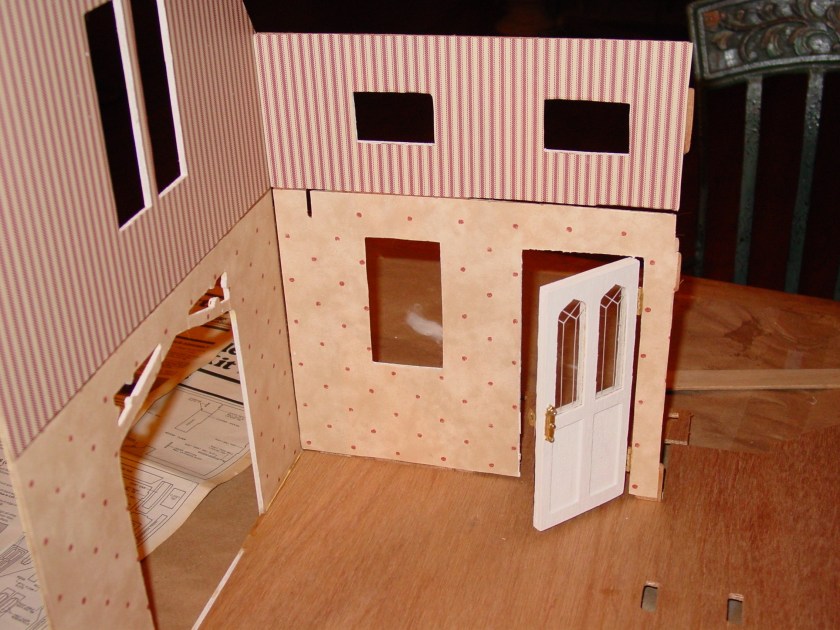
attach-hinged-door-before-attaching-walls-to-each-other

Once you have painted or wallpapered all sections, don’t forget to paint or stain the floor/ceiling sections. THAT’S RIGHT! With the ground level floor, you only need to paint or stain the floor that will be visible on top (the underside will be under the house). But the floors for the second level and attic have an underside that will become the ceilings for the first and second floors and they need to be painted at this point, too. Some people prefer to use commercially-produced floor treatments for dollhouses, such as tiny tiles or hardwood floors. Now is the time to glue those on as well. Take care NOT to attach raised level floor treatments where interior walls need to rest as this will make a perfect assembly impossible. Notches in the floors indicate where interior walls will be placed so hold the interior wall in position and use a pencil to lightly draw a line on the floor where both sides of the wall will be so you will know where to stop your floor treatments.

(I like to use a small square sponge loaded with various paint colors to “stamp” ceramic tiles for some floors. I will cover this in a later blog.)

stamped-tile-kitchen-floor

THE EXTERIOR:

  1. If you plan to paint the exterior walls of the house, paint them NOW (TWO coats of paint) and save some of the paint for touch ups later. REMEMBER: DON’T PAINT THE INSIDE OF ANY NOTCHES AND DON’T PAINT THE TABS THAT GO INTO THE NOTCHES!
  2. If using commercial sheets of faux brick or wood made for dollhouse WALL exteriors, use the wall sections as templates to cut the sheets of faux brick or wood now, making sure that you cut the sheets so that the sheets fit the EXTERIOR side of the wall, not the interior. DO NOT ATTACH the sections of faux brick or wood NOW. You will do that once the house is assembled.
  3. If you are an advanced builder, and plan to attach individually applied pieces of strip wood to mimic clapboard, that will be done AFTER the house is assembled, not NOW.

Now, paint the interior underside (interior ceiling) and edges of ALL ROOF sections at this point. The color you choose will become the color of the eaves of the house once assembled. We will not be applying a roof-type treatment to the exterior of the roof pieces until the house is assembled. So don’t worry about that now. We will discuss this in Step 5.

These steps can take some time so don’t expect to accomplish it all in one day. Just relax knowing that, when you do assemble the house, it will already be decorated. And that is so much FUN!


Copyright 2017

Let’s start at the beginning-Step 1

Whether you are a beginner or a pro, there is always a ‘beginning’ to every dollhouse construction project. In our eagerness to get started, it’s easy to jump ahead of ourselves. After many years of building dollhouses, I’ve learned that there is a certain order to the steps that, if followed, will save you a few headaches in the long run. I’ve also learned that some kits do not give the best advice about when, in the overall process, to do certain steps and that has led me to some very frustrating tasks that could have been easier if only I had done them in a different order. So I hope my experiences will help you have a great experience right from the beginning.

Whether you are a pro and have cut all of the walls yourself in a self-designed project, or you are working with a kit, the first step always needs to be laying out all of the main walls, roof sections, and floors to get a feel for the way the parts will fit together and just to inventory what you have. Since, in my next blog, I’m going to discuss the next step…pre-painting and wallpapering every surface prior to assembly, it’s necessary to know which section of which walls will actually be part of the same room. If the additional pieces, like trim, have come in the box labeled to a specific board, do NOT punch them out at this point. You will only confuse yourself later about where they all need to be placed. For now, we are ONLY working with the major walls, floors, and roof sections.

At this point, it is time to sand the edges of every section of every wall, including the inside of every window and door opening. Be careful…splinters are common. Make sure to get them sanded smoothly. This takes time but is necessary in order to end up with a finished project that is safe to handle.

I find it helpful at this point to use a pencil to lightly write on each wall section the name of the room that particular section of wall will be in when the project is assembled. Some wall sections possibly include a wall section from a first floor room, and a second floor room and maybe even an attic. Remember each wall has an Interior side and an Exterior side. Lightly mark in pencil which side is the interior and which side is the exterior.

lay-out-all-main-walls-to-inventory
Take inventory

Once you have accomplished this, it is best to go ahead and paint the inside of every door and window opening with your selected trim color because, at this point, you don’t have to be particularly careful about accidentally getting the paint on the exterior or interior walls since you are going to paint or wallpaper those next so you can cover up any trim paint mistakes that might get on the walls at this stage. I will admit that this is tedious (because you want to get on with assembly) but, trust me, you will be SO glad later.

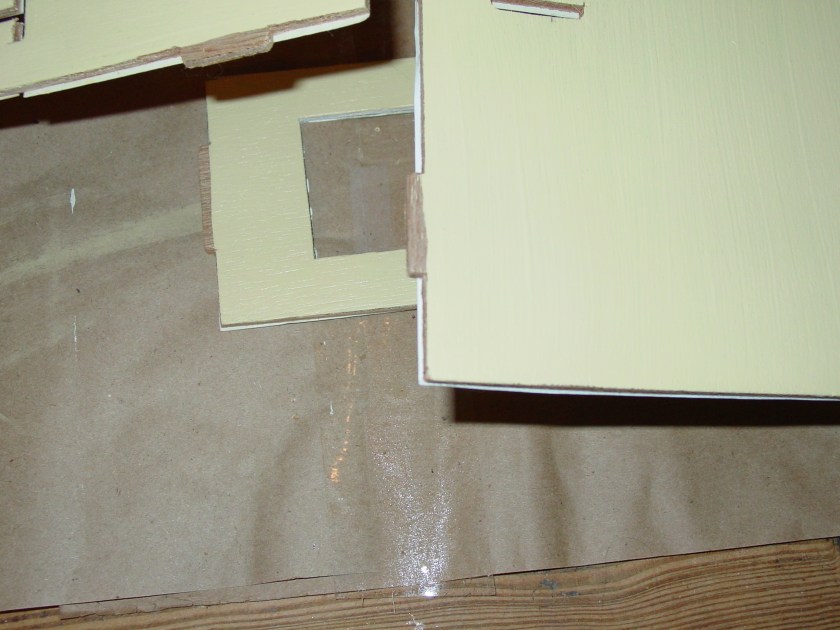
Just look at this door…the clear plastic “glass” that has been added later would surely be difficult to avoid getting trim paint on if you glued the plastic on BEFORE painting the trim inside the window openings!

paint-inside-window-and-door-openings-2
Paint inside openings

Well, that’s it for starting your project. If you do all of this using the average kit: taking inventory, sanding, and painting inside windows and doors, you’ll be ready to take a break now. Stay tuned for the next steps.

Copyright 2017

Stressed?

How many hours a day do you spend on a computer, phone, iPad, or other device connected to the Internet. (You’re doing it right now….but don’t go away yet.) How much of that time leaves you with a feeling of accomplishment and satisfaction? What about your children or grandchildren? Do they know how to build something from scratch or are their days spent typing away on a keyboard…playing video games?

Even Dr. Ruth touts the many psychological advantages of dollhouses…building them, having them…she has quite a few dollhouses in her own home…and plays with them. See this article: http://lilith.org/blog/2016/12/dr-ruth-has-a-dollhouse-too/  If they can work for Dr. Ruth as an adult, imagine how well they work to help abused chidlren who are in recovery from abuse. That is the mission of my nonprofit….Building Faith Play Therapy Toys, Inc.

But, back to the beginning. I was not a dollhouse fan until my parents took me to see the grand Bradford dollhouse in the Smithsonian as a child. Oh, how I wanted that dollhouse and I would have given anything to have it. But since it was unattainable, my mother taught me to use power tools for the first time in my life. I was 12 years old.

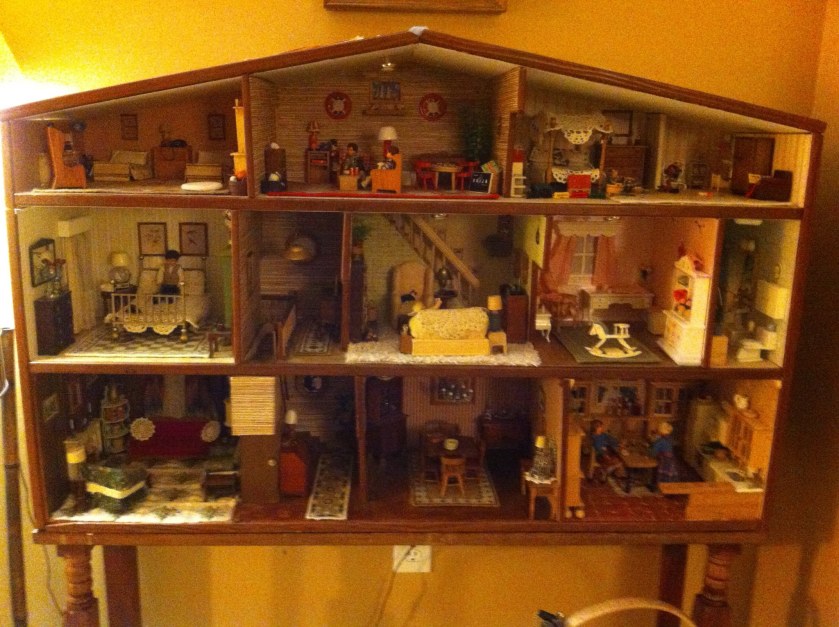
Without plans or blueprints, I built (from salvaged materials) this:

my-dollhouse

It took me 3 years to get it exactly “right”. At the end of those 3 years my self esteem had grown exponentially. I learned patience, creativity, and how to work with my hands in a whole new way.We didn’t have computers then so working with my hands was something children did more often than now, but this was something totally new. And it was all my own work…my own ideas. Nobody was on the Internet doing the same thing I was doing.

Now that I run a nonprofit that provides dollhouses to formerly abused children in recovery to be used in Play Therapy, I deal with many volunteers who are donating their time, building their first dollhouse. They approach the project with trepidation almost every time. They have many questions along the way and they hit rough patches.

But the singular common bond they have, once their project is complete, is…that same sense of newly found satisfaction and accomplishment that I had as a 12 year old. I hear it every time. “I never thought it could do this.” “What a cool experience!”

Most adults tell me that they began to use their project as a “stress-reliever” for, no matter how stressful your day has been, once you start on your project the stress melts away. I think it is because building a dollhouse requires total concentration and thought during the processing of the instructions. What step is next? What supplies do I need?

As your brain starts to deal exclusively with these details, the rest of your day, with all of its ups and downs, fades away until they are gone. And it doesn’t matter if you only have the time/energy to work on your project for 15 minutes a day, you will still feel yourself letting go of all of your day’s worries while also gaining a sense of accomplishment that you’ve made progress SOMEWHERE that day. (And we’ve ALL had those days when we’ve felt like we got NOTHING done!)

So…my suggestion is that you start with a pre-cut kit for your own “Do-It-Yourself” therapy!

Do you have a family member who would join you? What about teaching your child or grandchild to use their hands for something other than video games? I will forever be indebted to MY mother who showed me how to use my first power tools!


Copyright 2017